What Architectural Visualisation Actually Costs in Australia (And Why the Price Tier Matters)
Most Australian developers price their visualisation brief the way they price a trade quote: find three suppliers, take the lowest number, move on. It is a reasonable instinct in most procurement contexts. In architectural visualisation services, it is a decision that routinely costs more than it saves.
The price you pay for a render does not just determine image quality. It determines the category of marketing asset you receive, the legal exposure you carry under Australian Consumer Law, the conversion rate your sales campaign can realistically achieve, and the risk of council rejections or purchaser disputes downstream. Those are not variations of the same outcome. They are categorically different business results produced by suppliers operating at different capability levels entirely.
This guide maps Australia's three distinct visualisation pricing tiers to their real-world outputs, risks, and revenue consequences. You will learn what each tier actually delivers, where the false economies hide, how to evaluate studios beyond the quote, and how to match your visualisation spend to your project's commercial ambition. If you are committing a campaign budget, this is the conversation to have first.
The Question Developers Should Be Asking
The right question is not "how much does a render cost?" but what must this asset achieve, and what does it cost if it fails?
Architectural visualisation services are not a commodity. Two studios receiving the same brief will produce assets with categorically different market utility. The geometry, lighting, material accuracy, creative direction, and compliance rigour that separate a functional marketing instrument from a placeholder image are not visible in a quote. They only become visible when the campaign launches, or when settlement arrives and buyers start asking questions.
What follows maps three distinct tier profiles, budget, professional, and premium/boutique, as risk and output categories, not simply price bands.
Think of what follows as a risk-management guide. If you have a pre-sales target, a DA submission, or an investor presentation riding on your visual assets, the tier you choose determines whether those assets pull their weight or quietly undermine the campaign they were bought to support. The price of the render is almost never the relevant number. The relevant number is the revenue at risk if the render underperforms.
What Architectural Visualisation Services Actually Deliver
Before getting into price tiers, it helps to be precise about what you are actually buying, because not all renders serve the same function or carry the same consequences if they fall short.
Australian architectural visualisation work divides into four distinct typologies. Concept and feasibility renders communicate massing, scale, and spatial relationships during early design; accuracy expectations are low and fidelity can be modest. Planning and verified-view renders are submitted to councils and tribunals; they must withstand methodological scrutiny, and state-by-state variation in what constitutes acceptable verified-view accuracy means methodology rigour is non-negotiable, not a premium add-on. Marketing exterior renders establish the project's visual identity in the market and drive initial buyer engagement. Marketing interior renders are where legal exposure becomes concrete.
Under Section 18 of the Australian Consumer Law, a person must not, in trade or commerce, engage in conduct that is misleading or deceptive or is likely to mislead or deceive. Applied to interior renders, this means any depicted finish, fixture, spatial quality, or view that the built product cannot actually deliver becomes a potential compliance issue at settlement, not merely a creative disappointment. Accuracy in interior renders is a legal obligation, not an aesthetic preference.
These four typologies are not interchangeable. Using a concept-grade render in a planning submission, or a budget marketing render in an off-plan sales campaign, is a category error with real commercial consequences.
The distinction worth holding onto is between the visual product and the strategic asset. The image is what the file contains. The strategic asset is what the image enables: DA approval, investor confidence, pre-sales acceleration, or design-decision clarity that prevents costly mid-project changes. Those outcomes are not guaranteed by any render; they are earned by the right render deployed correctly. You can learn more about how it works in practice.
This gap between image and outcome is precisely why 3D architectural visualisation services span such a wide price range. Complexity, context modelling, materials and lighting accuracy, methodology rigour, revision depth, and legal defensibility all contribute to cost, and they all contribute directly to whether the asset performs.
Tier One: Budget Visualisation ($150–$500 USD per Image)
Globally, budget-tier architectural visualisation sits at $150–$500 USD per image. In the Australian context, this corresponds primarily to offshore commodity suppliers and a handful of local volume studios running compressed turnarounds on high throughput.
Understanding what that price actually buys is where most developers miscalculate.
What You Actually Receive
At this tier, expect lower polygon geometry, absent or token site context, generic material libraries pulled from stock, and lighting that is flat or inconsistent across the frame. Revision rounds are typically limited, and accuracy verification against the current documentation set is cursory at best. The images can look plausible at a glance. The problem surfaces when they are deployed for something that requires precision.
The Hidden Cost Structure
Poor visual communication at the design stage does not stay contained. When a render fails to accurately represent spatial relationships, material intent, or built form, it introduces ambiguity that travels downstream. Consultants, builders, and clients form expectations from what they see. When construction exposes the gap between depicted and documented, change orders follow. Those corrections routinely cost 5–10x more during construction than they would have at design stage. The cheap render did not save money; it deferred the cost and multiplied it.
What architectural visualisation contributes to a development campaign goes well beyond aesthetics. When the visual record is inaccurate, the consequences are commercial, not just cosmetic.
Where This Tier Carries Real Risk
Planning applications are particularly exposed. Councils and tribunals expect verified-view accuracy, and a render that cannot withstand methodological scrutiny can defer or derail a DA entirely. The same applies to marketing campaigns and investor presentations, where a render that does not match the documentation set creates legal exposure under Australian Consumer Law.
Budget visualisation is not categorically wrong. Concept-stage feasibility studies and internal massing explorations can tolerate lower fidelity without consequence. The risk is context misapplication: using a commodity asset where precision and defensibility are the actual requirements.
Tier Two: Professional Mid-Range ($600–$1,500 USD Exterior, $400–$900 USD Interior)
The professional mid-range tier is where most established Australian architectural rendering services operate, and for good reason. Studios at this level bring capable artists, structured methodology, and a working understanding of what developers actually need from a render.
The Australian numbers: exterior renders start around $1,400 AUD, interiors from $1,000 AUD, with a complete property launch package covering three exteriors and two interiors available from approximately $5,500 AUD. That package price point is meaningful because it signals a studio with a production process, not just a per-image rate card.
What you gain over budget tier

The step up from budget is substantive. Geometry detail increases noticeably, materials and lighting receive genuine consideration rather than library defaults, and site context gets modelled rather than suggested. Crucially, professional studios can produce planning renders with the methodological rigour councils expect. The revision process is structured to allow design accuracy checks against the current documentation set, which matters significantly for DA submissions and marketing compliance.
For mid-market residential projects, commercial fit-outs, and staged DA submissions where planning compliance is the primary goal, this tier delivers real value. Developers with a clear brief and a capable internal marketing team to contextualise the assets can work effectively within it.
Where it reaches its limit
The honest limitation of professional mid-range is not technical; it is creative. These renders are typically built to specification rather than to a campaign vision. What they often lack is creative direction, brand alignment, and the atmospheric storytelling that shifts a prospective buyer from interest to intent. The images are accurate and competent. They may not be felt.
For a project competing in a crowded market, that gap matters. Technical adequacy and emotional register are different things, and a render that achieves the first without the second is doing only part of its job. Developers who need assets to carry genuine conversion weight, rather than to simply document the design, will find the ceiling of this tier sooner than expected.
Exploring holistic visualisation and campaign services alongside your tier assessment will clarify what the next level of output can add to a specific project context.
Tier Three: Premium and Boutique Visualisation ($1,000–$3,000+ USD per Image)
Where professional tier reaches its ceiling, the premium and boutique tier begins. Globally, premium 3D architectural visualisation services run from $1,000 to $3,000+ USD per image; Australian boutique studios operate in comparable territory once full creative direction and campaign integration are factored in.
The price difference is not about resolution. It is about what the asset is being asked to do.
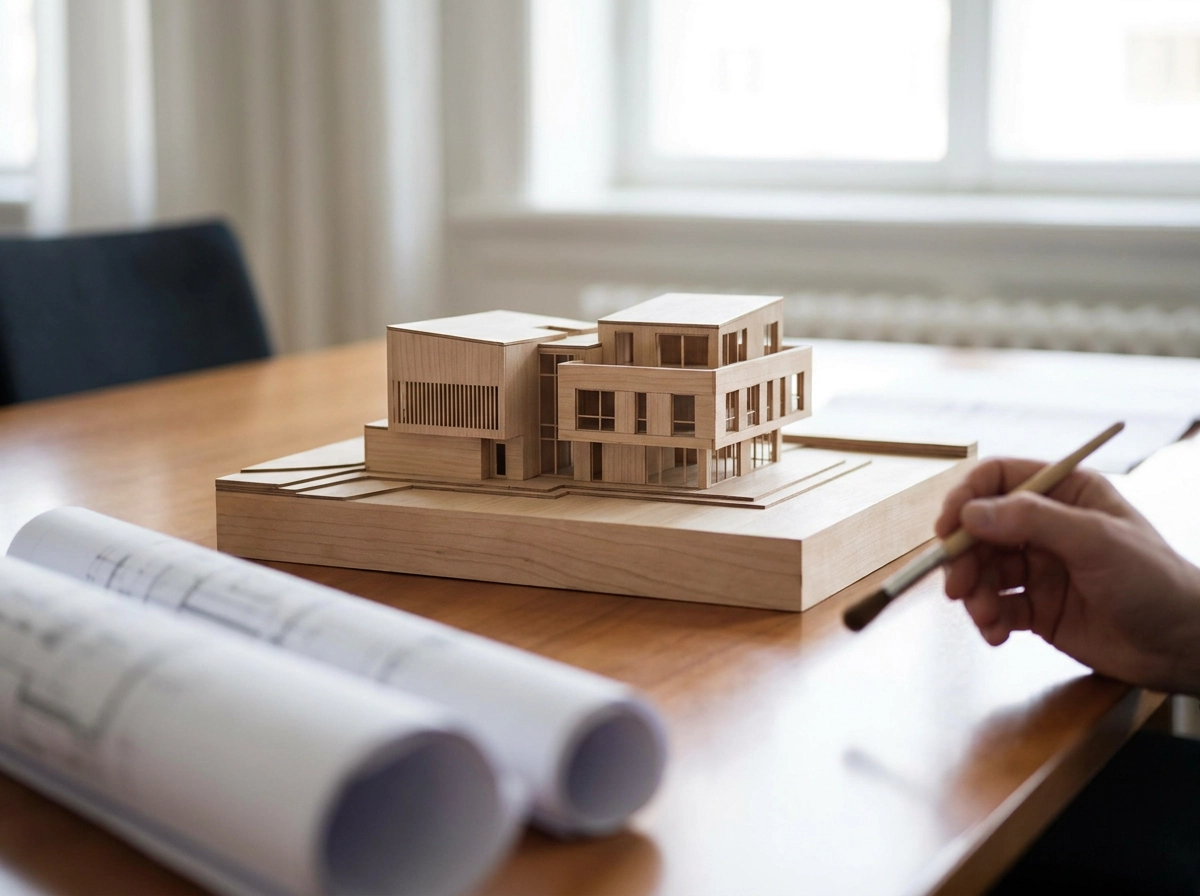
What you are actually buying at this tier is creative direction: a considered process of aligning the visual language of the renders with the project's specific market position, buyer demographic, and campaign tone. The styling decisions, atmospheric register, and compositional choices are deliberate, not default. The result is a suite of assets that function as genuine marketing collateral, not technical documentation dressed up with nice lighting.
Methodology depth is equally non-negotiable at this level. Premium-tier work involves verified-view accuracy capable of withstanding tribunal scrutiny, interior renders constructed with explicit attention to Australian Consumer Law exposure, and context modelling detailed enough to read as photorealistic in printed and digital market materials. Every depicted finish, fixture, and spatial quality is cross-referenced against the current documentation set. That process is what makes the asset legally defensible, not just visually convincing.
Premium studios also increasingly integrate animation, VR walkthroughs, and 360-degree tour formats into their offering. These immersive formats are increasingly present at premium residential project launches, with animation and VR tours typically starting at around $2,000 to $2,500 USD. You can see the range of what integrated campaign delivery looks like in practice across Studio Artegra's project portfolio.
The premium tier is not a luxury purchase. For a project with meaningful pre-sales targets or a competitive market position to establish, the render is doing serious commercial work. At this tier, you are not buying a picture. You are buying a conversion instrument.
The ROI Case: Why Visualisation Spend Is a Risk Management Decision
That commercial argument only holds if the numbers support it. They do, decisively.
For a 100-unit off-plan residential launch, a complete render asset bundle typically represents around 0.13% of total project revenue (based on a worked example from a 100-unit off-plan launch). At a 1% acceleration in sales conversion, that spend returns approximately 7.5 times its cost. At 5% acceleration, the multiple reaches 37.5 times. These are not aspirational figures; they reflect what happens when pre-sales velocity improves even modestly against a project's revenue base.
Established developers understand this arithmetic. They now allocate 0.5% to 1.5% of total marketing budgets to visualisation, not because renders are inexpensive, but because the cost of underperforming assets compounds quickly. Stalled pre-sales extend holding periods. Failed approvals reset timelines. Investor hesitation delays drawdowns. Each of those outcomes carries a financial consequence that dwarfs any saving made at the render quote stage.
The design-stage cost argument reinforces this further. Research into large-scale construction projects confirms that design-related decisions account for significant proportions of cost overruns and delays. The design-stage cost argument explored in Tier One compounds this further.
Beyond cost avoidance, high-quality visualisation performs three distinct commercial functions. It accelerates investor and financier confidence, reducing holding cost exposure. It compresses pre-leasing and pre-sales cycles, pulling revenue forward. And it creates the design-decision clarity that prevents the mid-project changes that erode margin.
The tier you choose determines which of these functions are actually available to you. A budget render produces an image. A premium render produces a commercial instrument. Before committing to a quote, it is worth being precise about which one your project needs. Working through questions for a visualisation brief before engaging a studio is a practical place to start that thinking.
Australian Consumer Law and the Render You Cannot Afford to Get Wrong
The ROI case makes the financial logic clear. But there is another dimension to tier selection that sits outside the spreadsheet entirely, and it carries consequences that no amount of marketing performance can offset.
As established above, Section 18 ACL exposure applies directly to depicted interior finishes, fixtures, and spatial qualities. Finishes that were never specified. Views that the building's orientation cannot deliver. Ceiling heights, fixture quality, or spatial proportions that the documentation set never confirmed. Each is a potential trigger at settlement, where buyers and their solicitors increasingly arrive with the marketing materials in hand and a checklist.
Misleading conduct claims carry genuine weight in Australian law, and relief available to a successful claimant can be substantial. This is not a theoretical risk, and a well-founded claim is costly to defend.
The compliance gap at the budget and lower mid-range tiers is structural, not incidental. These studios do not typically run an accuracy verification process that cross-references render content against the current documentation set. The image may look convincing; the liability it carries may be silent. A render that depicts a stone benchtop that the specification sheet never confirmed is not just a styling choice. It is a representation.
Planning renders and verified-view photomontages face a parallel environment. VCAT, NCAT, and equivalent planning tribunals across Australian states operate environments where render methodology can be subjected to scrutiny. Planning authorities across Australian states apply differing requirements, and methodology rigour matters across all jurisdictions. Councils increasingly scrutinise methodology, not just visual quality.
Premium architectural visualisation companies treat accuracy verification as foundational, not optional. That discipline is what converts a marketing asset into a defensible one.
How to Evaluate Architectural Visualisation Companies Beyond the Quote
Knowing what separates a defensible asset from a liability is only useful if you can identify the studios capable of producing one. Here is how to assess architectural visualisation companies before a quote becomes a commitment.
Look beyond the glamour shots in the portfolio. Marketing renders are the easiest work to present well. What distinguishes a methodologically capable studio is evidence of planning-compliant verified views alongside the hero imagery. Verified-view photomontages require survey control, camera matching, and documented methodology. If a portfolio shows only atmospheric lifestyle renders, the studio may not have the technical infrastructure that regulatory submissions and tribunal scrutiny demand.
Ask directly about Australian Consumer Law and interior render accuracy. A studio with genuine compliance awareness will be able to explain, specifically, how depicted interior finishes, fixtures, and spatial qualities are cross-checked against the current documentation set before an image is approved for marketing use. A blank look, or a vague answer about "matching the brief," is diagnostic. It tells you that accuracy verification is not a structured part of their process.
Assess whether the assets work as a suite, not just as individual images. Campaign-coherent visualisation compounds conversion; a collection of technically competent but visually disconnected renders does not. Ask to see campaigns, not just images. Look for consistent lighting logic, material language, and atmospheric register across exterior, interior, and contextual views. Coherence across a suite signals creative direction, not just production capability.
Understand the revision and accuracy protocol in writing. How many revision rounds are included? At what stage is the model checked against the current drawing set? Who carries responsibility for flagging discrepancies between the render and documentation? Studios with professional infrastructure can answer these questions precisely. Ambiguity here is a contractual and commercial risk.
Consider integration capability as a multiplier. A studio that extends into animation, digital media, printed collateral, wayfinding, and display suite environments allows every asset in a campaign to carry the same visual language. That coherence compounds the return on each individual deliverable, from planning approval through to settlement.
The Compounding Value of an Integrated Visualisation Campaign
Integration capability is where the previous evaluation question finds its answer in practice.
A single render produces a single impression. An integrated campaign produces a buyer journey, and that distinction is where off-plan projects are won or lost. The developers who consistently sell at target are not necessarily those with the best product; they are often those with the most coherent visual story told across every touchpoint a buyer encounters.
The friction problem is real, and it compounds. When a buyer moves from a social ad to a printed brochure to a display suite visit, each transition either reinforces or erodes confidence in the project. Assets produced by separate vendors, under separate briefs, with separate creative interpretations create subtle visual dissonance that buyers feel even when they cannot name it. The colour palette shifts. The lifestyle register changes. The spatial character of the renders feels disconnected from the display suite. That friction introduces doubt, and doubt delays commitment.
A holistic architectural visualisation and marketing studio resolves this by holding a single creative direction across every asset class in the campaign suite.
Interactive formats add another dimension to this discipline. VR walkthroughs, 360-degree tours, and model unit configurators are increasingly present at premium project launches, supporting buyer evaluation of off-plan apartments. These formats demand the same creative direction rigour as static renders; a poorly art-directed VR walkthrough actively undermines the campaign it is meant to support.
Studio Artegra operates at this intersection. As a holistic architectural visualisation and marketing studio, we bring creative direction, visualisation, animation, print, digital, and physical environments under a single aligned brief, ensuring campaign coherence from DA submission through to settlement. The result is not a collection of assets; it is a campaign that converts.
Matching the Tier to the Project: A Practical Framework
All of that campaign coherence means nothing if the tier is mismatched to the project stage. Here is a plain framework for getting that decision right.
Concept and feasibility: Budget or low-mid tier is appropriate. The goal is massing, proportion, and spatial communication, not a marketing asset. Premium spend at feasibility is misallocated; you are buying precision you cannot yet use.
Planning and DA submission: Mid-range is the floor, and verified-view methodology capability is non-negotiable. A deferred or rejected DA costs far more in holding time, consultant fees, and programme delay than the price difference between a budget render and a methodology-capable studio. This is the stage where cutting the visualisation budget carries the highest risk per dollar saved.
Mid-market residential marketing: Professional to premium tier, calibrated to competitive context. In a market with active comparable stock, generic renders do not differentiate. If buyers can see three similar projects in the same suburb, the one with considered lighting, atmosphere, and lifestyle staging will hold their attention longer. The tier decision here is really a question about how hard the asset needs to work. Work like the visualisation and interior styling for Tim Spicer Architects illustrates how considered creative direction lifts an asset beyond technical competence into genuine emotional resonance.
Premium, landmark, or mixed-use projects: Boutique tier with full creative direction and integrated campaign capability. At price points where each conversion carries significant revenue impact, the render is not supporting the sales process; it is the sales process. Technical adequacy is insufficient here.
Off-plan pre-sales with specific targets: Stop treating the render as a line-item cost. Frame it as a function of pre-sales revenue at risk. The 0.5–1.5% of marketing budget benchmark cited earlier applies here. At that ratio, the asset cost is marginal relative to the conversion consequence of getting it wrong.
The Render Is Not the Cost, The Outcome Is
The framework above maps the decision. This closing point is simpler: every render you commission is a hypothesis about what an asset needs to do. Tier selection is how you manage the risk of that hypothesis being wrong.
Three failure modes follow tier misalignment consistently. Interior renders that cannot withstand ACL scrutiny at settlement, as described in the compliance section. Planning submissions that fail tribunal methodology standards, stalling or losing a DA. And downstream change orders amplified by the cost multipliers described above. Each of these is a commercial consequence, not an aesthetic one.
The practical takeaway is sequencing. Before requesting a single quote, define what the asset must achieve. Regulatory compliance, investor confidence, pre-sales conversion, campaign coherence: these are not interchangeable requirements, and they do not resolve at the same tier. Let the requirement set the tier, then find the studio that can deliver it. Inverting that process, choosing on price and hoping the output is fit for purpose, is where most visualisation regret begins.
The render is not the cost. The outcome is. What a stalled pre-sales campaign costs, what a deferred DA costs, what a settlement dispute costs: these numbers make the difference between tiers look modest.
If you want a clear-eyed view of what your visualisation budget should actually be achieving, and whether your current approach is delivering it, the Studio Artegra team is worth speaking with. We work across the full scope of architectural campaigns, and we are direct about where spend is well-placed and where it is not.
Conclusion
Architectural visualisation is not a line item to minimise. It is a risk management decision with commercial consequences at every tier.

The key takeaways are straightforward. Price tiers reflect genuine capability differences, not just aesthetics. The wrong tier for your project creates downstream costs that dwarf the initial saving. Australian Consumer Law compliance is non-negotiable, not optional. And the requirement must define the tier, never the other way around.
Studios that understand your regulatory environment, your sales timeline, and your approval pathway are not interchangeable with those that simply produce attractive images.
Before your next project moves forward, audit what your visualisation assets must actually achieve. Then match the spend to that outcome with precision.
The difference between a stalled campaign and a successful one often traces back to a single early decision. Make it a deliberate one.